5.0on Google64 reviews
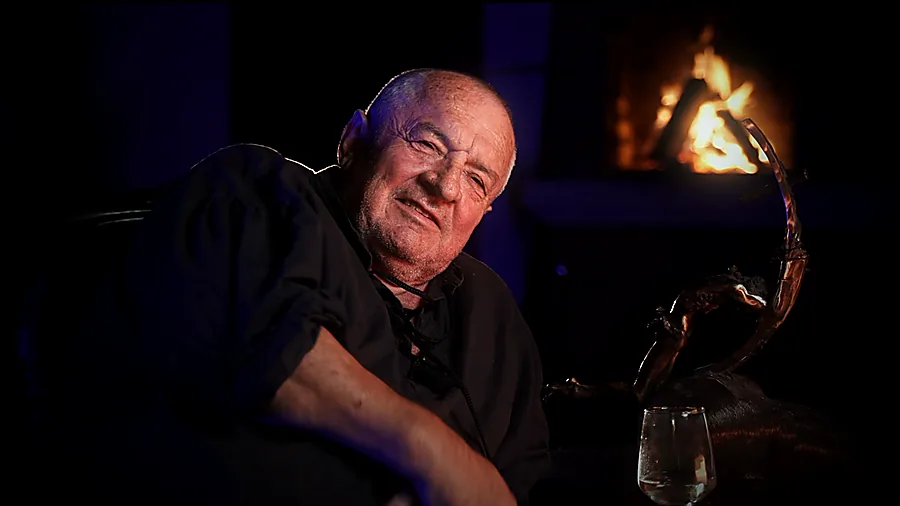
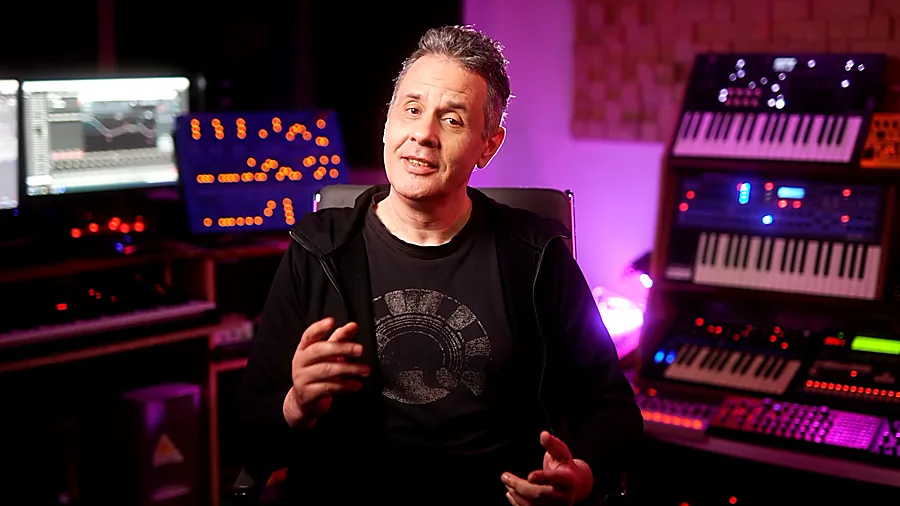
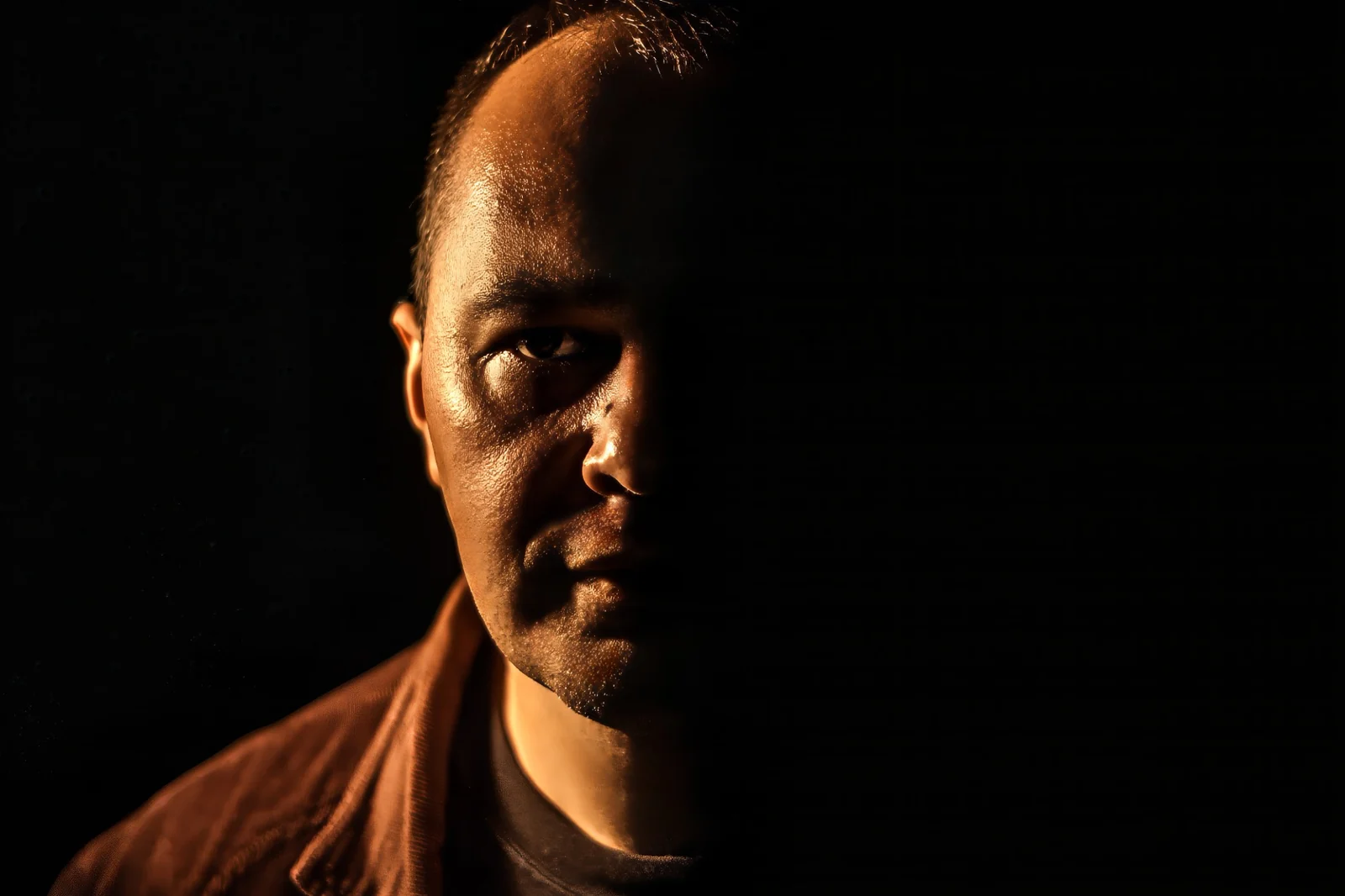
Mugur Marin, portrait in dramatic light

MUGUR MARIN · N-TRANCE MEDIA · BUCHAREST

Mugur Marin

Filmmaker · videographer · video producer and editor

“I came to the films I make today by a long, winding and completely unpredictable road.”

PROFILE

Mugur Marin is a filmmaker, videographer, video producer and editor from Bucharest, the person behind N-trance Media and CinematicBizStories. He makes documentaries, video portraits, Business Stories and event films, after more than two decades spent across image, sound, production and editing.

The company has existed since 1992. In 2005 I rebranded it and began building the direction that would eventually lead me to the films I make today.

≈17 years oldComputers 2000
≈20 years oldBoston · Jaguar
1999sound & light
2005N-trance Media
2006Alina Ștefan
2020film becomes my main work

How I came to the films I make today

I came to the films I make today by a long, winding and completely unpredictable road. I never really knew what I wanted to be when I grew up. What I did know was that I was always curious to understand how things worked: to take them apart, repair them, build them, try things. Sometimes break them too — God, the number of things I’ve broken :))) — but that is part of the process.

I am an ultra-autodidact, perhaps good at too many things.

At around 17, in the 1990s, I was already working with computers at Computers 2000, a small company in the Obor area that would later become Flamingo Computers. I can still remember running between the warehouse and the shop with my pockets stuffed with AMD and Intel processors, looking left and right as I crossed Calea Moșilor so tram 21 would not run me over.

The funny thing is that I was not thinking much about myself. I was thinking about the value of the processors in my pockets if I tripped and smashed all the pins. I could already picture myself afterwards with tweezers and bottle-bottom glasses, straightening hundreds of pins one by one. Which, in fact, I did a few times.

Then came hardware, networks, service work and years in which, if something did not work, I absolutely had to find out how, when and, above all, why.

At around 20 I left for the United States. I lived in Boston for almost a year and ended up working at a Jaguar dealership, sometimes in mechanics, sometimes in IT. I knew mechanics from home: I had repaired cars with my father since I was a child. Apple Macs were another story — I had never even seen one in Romania.

One day my boss’s Mac broke down. I knew PCs very well and Macs not at all, but I did not consider that a good enough reason to refuse the challenge. I told him I would fix it and took the computer home without having the slightest idea what I actually had to do to it. It took me two days. The upside was that, for two days, I was free of valves, rocker arms and oil on my hands. I came back with the Mac working and I do not think I ever told him the “I had absolutely no idea what I was doing” part.

You don’t know? You learn. It has to work tomorrow? You learn by tomorrow.

After I returned to Romania, I spent several years trading cars brought in from Germany. Thousands upon thousands of kilometres, long drives, purchases sometimes made by eye, ear, experience and instinct. Decisions made quickly, decisions you then had to live with whether you liked them or not. Looking back, it was risky too — perhaps too risky. I drove enormous distances, day and night, and after that many kilometres fatigue was not exactly the best co-driver.

Also during the 2000s I worked for about two years at Sprint Computers, and later at SCOP Computers, where I ran the printer service department.

One memory from that period is harder to forget. I was ill, but I went to work anyway. I had taken Biseptol at home, got on tram 16 towards the office, and from there there is a hole in my film. The next image I remember is already being at work, on an IV, with the ambulance beside me. I had had a severe allergic reaction. Apparently, even unconscious, I was not very good at taking a day off work.

IT was one of the first fields that taught me something I have carried with me ever since: a problem does not disappear if you stare at it long enough.

You have to understand it.

I have also had jobs that sound made up when I tell the story now. For a while I worked with a good friend — he knows who he is — in an Israeli gold-chain factory. They obsessively weighed us when we arrived and when we left, to make sure no link had somehow disappeared. We were driven mad by the procedure and joked that they were probably afraid we might swallow the gold, link by link. :)))

Around the same time I was a partner, again with a good friend who knows who he is, in a small custom-furniture workshop. We designed, built, installed and, obviously, hauled everything on our backs. A lot.

Only the two of us know how many kitchens we carried up apartment-block staircases.

That is where I worked seriously with wood long before restoration or sculpture ever crossed my mind. Looking back, that direction did not really appear from nowhere either.

Music

Music has always been with me. All my life.

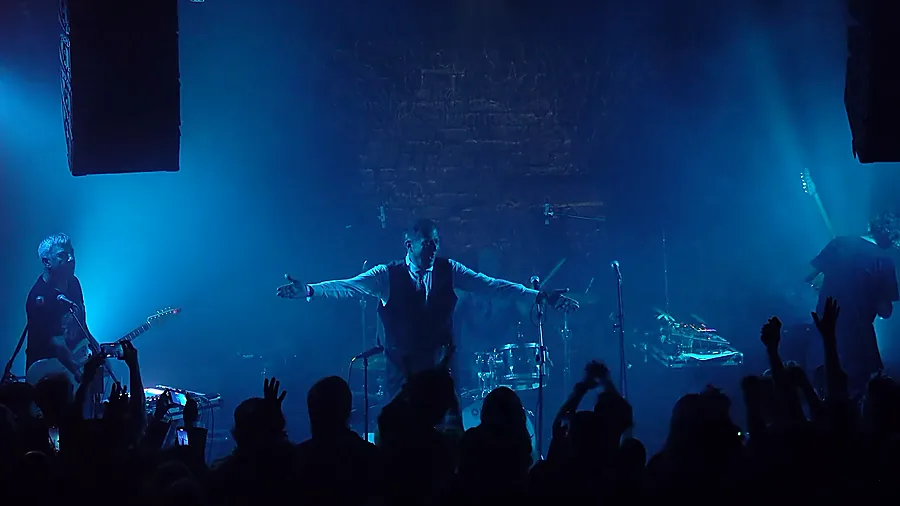
I studied piano as a child, and I still regret that my parents did not push me harder to continue. I have played guitar since high school, built and restored guitars from scratch and, much later, even ended up playing live on stage. Then came the DJ years, the concerts and all the years in which I listened to music closely, not simply played it.

God, how much music has passed through me.

I think all of that entered my reflexes more deeply than I understood at the time. Editing has rhythm too. Sometimes I cut an image almost the way you would come in with a chord — or with a single distinct, unique note. Other times I cannot explain why a shot has to stay for one more second.

I just feel that the moment is not over yet. The truth.

A completely different kind of school

There were also a few years of my life that are difficult to place under any single profession, but they became a completely different kind of school: a school of protocol, discretion, diplomacy, dealing with very different people and, perhaps more importantly than anything else, learning how to read a room before opening your mouth.

For a while I worked as assistant and driver for Princess Marina Sturdza.

She had officially returned to Romania in 1997 together with the International Herald Tribune to organize the country’s first major investment summit, working at the time with the Government and the Presidency.

For me it was an entrance into a completely different world: international press, business, diplomacy, protocol. The President of Romania, ministers, people I had previously seen mostly on television and who were suddenly only a few steps away. I still remember them walking past me through hotel corridors. I was dying to ask them a few things. :)))

At that time I was not filming the way I film today, and this is one of those mismatches of timing that still hurts. I would have loved to film Marina Sturdza. I met her too early for the filmmaker I would later become.

Today I would know what to look for. Not the title, not the protocol, not the princess.

The person.

I would sit with the camera in front of her and simply listen. The pauses. The eyes. The hands. The things she talks about and, perhaps even more, the things she hesitates to talk about. It is one of the films I regret most not having made.

I also ended up working with Leslie Hawke, the mother of actor Ethan Hawke, who came to Romania through the Peace Corps and became involved in social projects for children and families living in poverty, including Roma families. She would later co-found OvidiuRo and spend many years working to improve children’s access to education.

Within a relatively short period I had moved from powerful people, protocol and international meetings to people whose problems were, quite simply, about survival. Long before I knew I would make films about people, life was already forcing me to look at very different kinds of people. And to understand that a person is neither their job title, nor their suit, nor their car — nor the absence of any of those things.

Music, sound, light, radio and the years when I learned to do almost everything

In 1999 I joined a company that had originally been a transport business and built a completely new direction there from scratch: importing and selling professional sound and lighting equipment for clubs, concerts and events. Speakers, mixers, players, lights. I travelled the length and breadth of Romania with them until I almost forgot the road home. It was also the only period of my life when I worked in sales in the conventional sense.

But the truly special part was something else: it was the only time in my life when my father and I were colleagues.

And yes, my father was my boss.

It is pretty great when your dad is your boss.

We went to trade shows together, travelled to Germany and the Netherlands for equipment and built, from scratch in Bucharest, a sound & light showroom that was basically a fully functioning club.

Then came radio. At Radio 21 and Europa FM I worked exactly where I belonged:

not at the microphone, but behind it.

And very often under desks. Or in some isolated location somewhere in the country, on top of a hill or mountain. Computers, networks, studios, technical relocations, soundproofing, microphones, mixers, transmitters, antennas, installations, cars.

That is where one rule became permanently fixed in me, a rule I still use in film today:

the technology has to work so well that you can forget about it completely.

It is like the clutch you press instinctively when you change gear.

You do not think. You just do it.

That is how I want the camera, sound and lighting to be too: they should not occupy my mind at the exact moment when the person in front of me says or does something that will never happen in quite the same way again.

The company had existed since 1992. In 2005 I rebranded it and began building N-trance Media. To keep the road sufficiently winding, the first activity in that period was not film. It was an agency placing nannies and domestic staff. Yes. I know. That is more or less what my professional life has looked like.

But even there, it was still about people. A great many of them. I remember arriving at the office one day and finding a queue of nannies and housekeepers stretching for tens of metres down the street, all there to register in our database. I looked at them and genuinely panicked — I think for a few seconds I did not have the courage to walk into my own office. It was completely different from anything I had done before, but once again it was a situation in which I had to understand people.

After that, everything I had accumulated up to then began to come together: music, sound, lighting, computers, technology, events, photography and, increasingly, video. At the busiest point we were around 14 people, employees and collaborators combined. We produced corporate parties, conferences, product launches, concerts and technical productions for companies including Raiffeisen, Piraeus Bank, Michelin, Roche and Bayer. The largest event I coordinated at the time was a Piraeus Bank Christmas party with around 5,000 people.

Sometimes I was doing the work of three people at once: sound, lighting, camera, photography, projection, editing, graphics. It was not necessarily the healthiest way to work.

Obviously.

But that was me.

I have never liked standing beside a problem waiting for the person who knows how to solve it. I wanted to know myself.

The people I taught

That was also when I discovered how much I enjoy teaching other people. In fact, it had started much earlier: I began working with Ada Cartianu while I was still a student at the “Nicolae Tonitza” High School of Fine Arts, and our work together continued after I finished high school. We were both very young; today Ada is a Romanian-American artist and author.

On her own biography page she describes me, in the period after graduation, as a young Tonitza graduate and says that I encouraged her to create the way she perceived the world and to trust her own imagination. Reading that after all these years means an enormous amount to me.

Later came the people at N-trance: camera operators, photographers, sound technicians, lighting technicians, DJs, technical crew.

Some of them I took almost from zero.

Alina Ștefan has been beside me since 2006. That is twenty years of collaboration, learning and growth. I watched her develop, work and build her own photographic eye and her own path. We still work together today and I am very proud of how beautifully she has grown professionally.

God, the number of courses I ran. I can still remember the dozens of boards on which I drew and explained technical details through examples from everyday life, trying every possible way to make the information stick in someone’s mind. I was not simply teaching people where a button was, but why we did something in a particular way and, above all, how to think for themselves when things did not go according to plan. Because at an event, when something breaks, there is no “we’ll look at it tomorrow” and no “we’ll try again”.

It has to be solved.

Now. Instantly.

Sometimes I look at where some of those people have ended up and I get goosebumps. They know who they are. If the person next to me eventually does something better because I once showed them something, to me that is fantastic.

Pure joy.

At the beginning of the pandemic, in 2020, film became my main work.

It was no longer one of the many things I did. It had become the direction into which, almost naturally, everything else was beginning to converge.
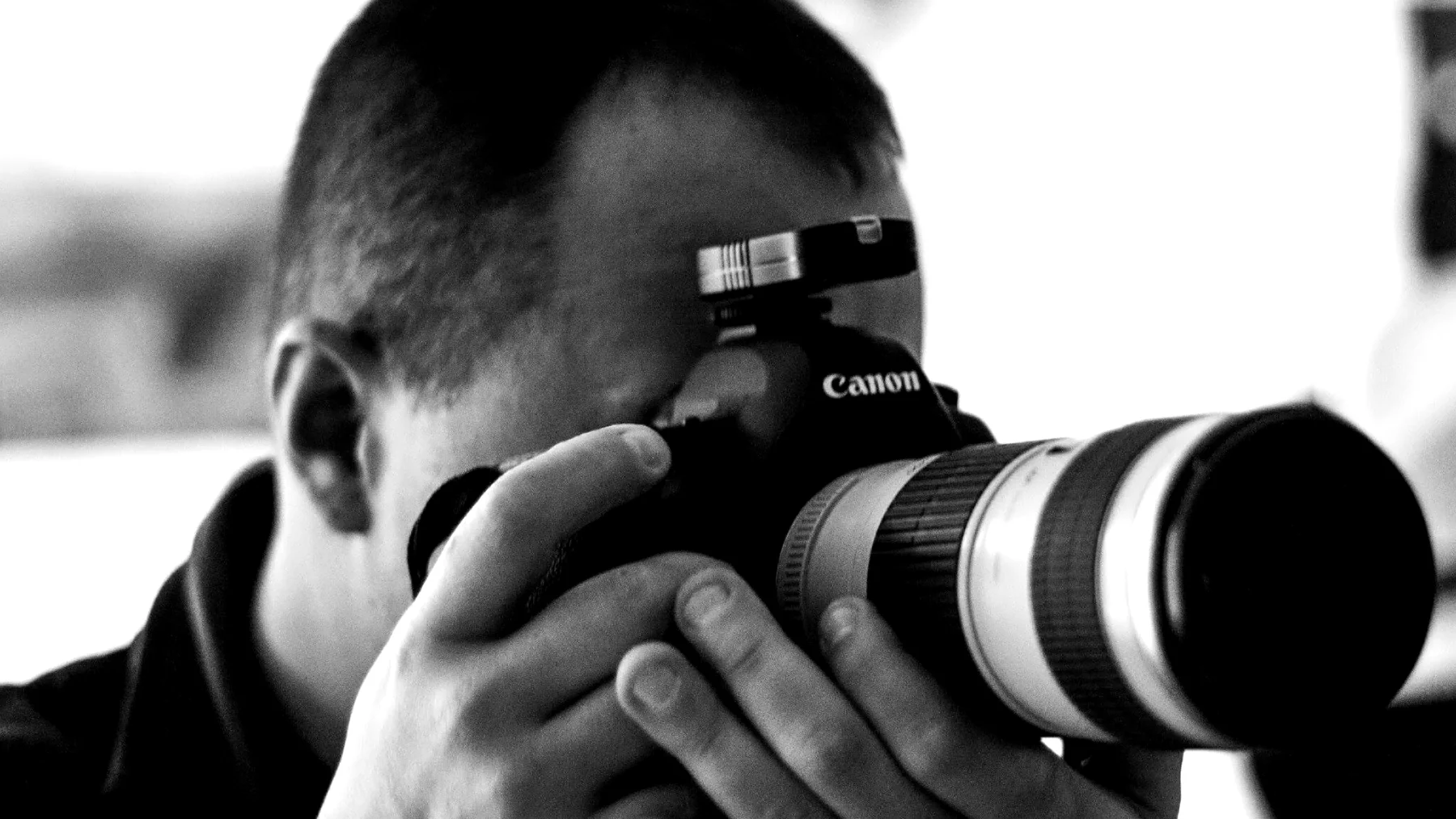
Mugur Marin photographing with a professional camera

Hundreds of events taught me to hunt for the moment

Before documentaries, video portraits and CinematicBizStories, there were hundreds of event shoots: weddings, christenings, parties, concerts, corporate events. Years spent with a camera among people. That period probably shaped me more than I realized at the time.

At an event, you do not get another take. A look appears and disappears. A reaction lasts a second. A hug, a tear, a laugh, sometimes just a whisper. If you miss the moment, it is gone.

In a way it is like theatre. You may have problems at home, something may hurt, you may be tired, you may have had the worst day of your life.

But when the actor walks on stage, what matters is that they are there, then.

The moment does not care about my problems. It happens. Either I catch it or I do not.

I learned not to watch only the person who is speaking, but also the person listening. Not only the bride and groom, but the mother watching them from a corner. Not only the stage, but the person in the audience who, for two seconds, completely forgets everyone around them.

For years I hunted, almost obsessively, for the truth of each moment.

Without knowing that, in fact, I was preparing myself for the films I would make later.

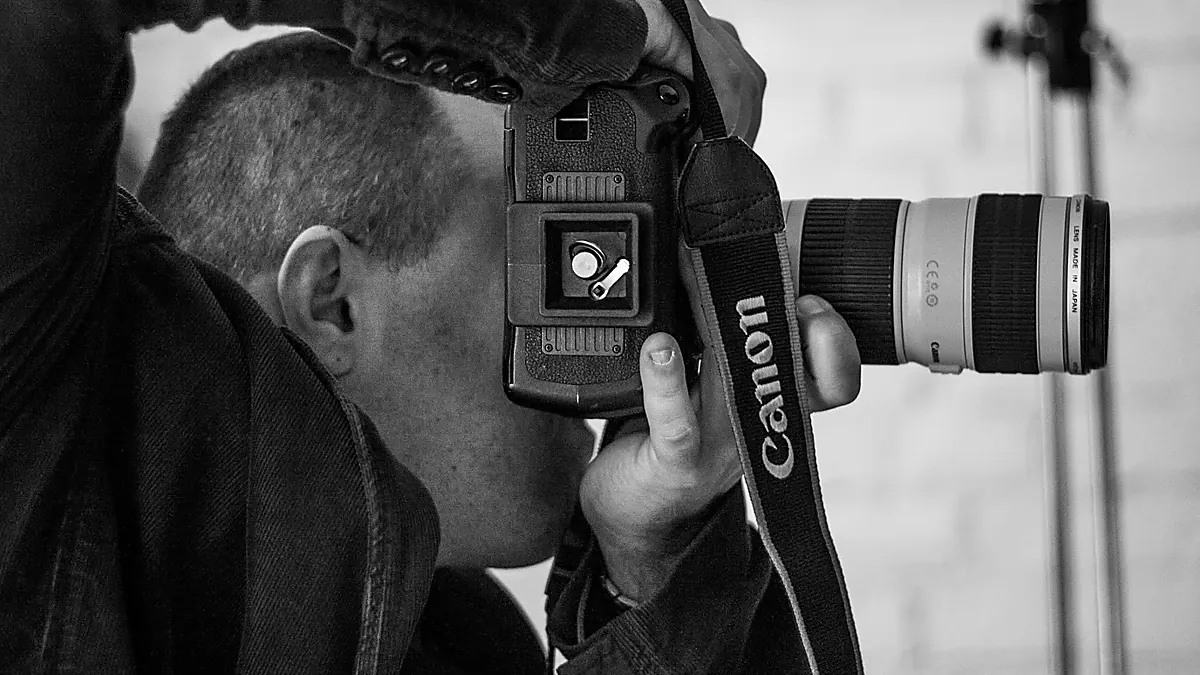
Mugur Marin during a shoot

I do not make people play a role in front of the camera

Most of the people I film are not actors, and I do not want them to become actors for me. I prefer to film them as themselves, with their small imperfections. Those are exactly what make them real. When someone tries to say everything perfectly for the camera, sometimes they themselves begin to disappear from the frame.

What interests me is the moment when they forget the camera a little: a pause, a look, their hands, the way they touch an object they are talking about, a hesitation, sometimes even a word said wrong.

That is where I begin to really see them.

When it happens, it pulls me in too. Sometimes I catch myself speaking along with the person in my head. Other times I whisper a word to them almost without realizing it — and then I wonder whether my whisper is getting picked up by the microphones too. :)))

At that moment, the technology has to be reflex. Camera, sound and light have to work like the clutch: I do not think about them. I just do it. I do not want to think about buttons or microphone gain at the exact moment when the person in front of me says something they may never say again in exactly the same way.

For a few moments, there is only them.

The centre of my universe.

Why all these things ended up being connected after all

For a long time it seemed to me that I had done too many things that had nothing to do with one another. Today I no longer think that.

Computers taught me to look for the cause of a problem. Mechanics taught me not to be afraid to take something apart. Music gave me rhythm. Radio turned sound into reflex. Events taught me to anticipate the moment. The very different people I met taught me to read context. Teaching forced me to understand things well enough to explain them to someone else.

Almost all of it ended up, in one way or another, in the way I film.

In the philosophy behind me.

My films speak for me better than I can

I can talk for days about cameras, lenses, sound, light and editing. But the films are what give me away. In them you can see where I choose to place the camera, how close I get, when I choose to stay silent, how long I let a moment breathe and, perhaps most importantly, what I choose not to cut in the edit.

Ion Mândrescu

With Ion Mândrescu, it is almost impossible for me to separate the film from the person. To me, he is not simply the sculptor I filmed. He is my friend and one of the people I consider mentors on my own path towards sculpture.

When I filmed him, I was not interested only in the finished works, but in his hands, the bronze, the fire, the workshop, the pauses and the way he looks at a work before saying anything about it. The person among all those things.

“Man, Time, Space” is one of the fundamental themes of his work, and here I will allow myself to quote the master: “Sculpture is my form of existence, it is my dialogue with the universe…”

With Ion, I wanted to make a film about the sculptor.

But above all I wanted to make a film about Ion.

There is a difference.

And while filming him, something happened that I had not expected: he turned me back towards material. Towards wood, roots, old things, forms begun by nature long before I ever put my hands on them. Filming him, I started looking at myself again too.

That is how powerful a connection can be. Or how powerful Master Ion Mândrescu is.

Watch the Ion Mândrescu documentary →
Ion Mândrescu in the documentary produced by N-trance Media

Victor Popescu

With Victor Popescu, the circle closes in a different way. Victor had initially been heading towards architecture, and at the beginning I was the one who pushed him towards sound. From there, he built his own path. Today he is a sound designer, musician and the person behind Square Sound Studio, and he even ended up recording Renée Zellweger for a modification to a piece from Chicago, the film that would go on to win six Oscars, including for sound.

When I think about the kid at the beginning and the person he became… yes. I still get goosebumps.

But many years later something happened that, to me, feels extraordinary: I arrived with my camera to listen to his story. Once I had helped him start in a direction; now I was asking him, “Right. So how did you get all the way here?”

Sometimes knowledge comes back to you after twenty years in the form of a person you are simply proud of.

Victor Popescu / Square Sound Studio
Victor Popescu in the project filmed at Square Sound Studio
Victor Popescu / Square Sound Studio

Partizan, Ioana, Cristian and the other stories

Partizan and Artan brought back the energy of the stage, live music and the reflexes formed during all those years of concerts and events. With Ioana Adina Marin, the film meant calm, trust and a person who did not need to be turned into a character in order to be interesting. With Cristian Fetter, what interested me was competence seen in action: the person doing what they know how to do, not a person made to demonstrate for the camera.

Very different films. But in all of them I am really looking for the same thing:

the real person behind the image.

For now, I am here

After a professional life in which I have built computers, repaired cars, worked in radio, built stages, worked with sound and lighting, coordinated people, photographed and filmed hundreds of events and thousands of people, my direction today is much simpler.

Films about people.

Through N-trance Media, CinematicBizStories — documentaries about people — and ProfilVideo — professional video portraits — I am increasingly interested in people who have something to say, even if sometimes they still do not quite know how to say it in front of a camera.

Perhaps especially then.

And at the same time, I am returning to something I started with many years ago: working with my hands. Restoration, wood, sculpture. I like objects that already have a history — old furniture, instruments, amplifiers, wood shaped by water and weather, roots and trunks in which nature had already begun a form before I arrived.

I love wood.

Maybe that is also why model building fascinated me so much. Long before it became normal to pull a drone out of a backpack and film from the air, I built and flew four radio-controlled helicopters. The last one was a beast of roughly 2.5 metres, an almost industrial platform built specifically for aerial filming.

Today you launch a drone and it all seems almost ordinary. Back then you first had to build that damn thing, and only after that find the courage to lift it off the ground. And yes, you needed courage. A lot of it.

Mechanics, transmission, vibration, balance, electronics — the whole road leading to the shot you wanted to capture. Maybe even then I was not interested only in the image.

I was interested in the entire road to the image.

Today I fly drones, maintain my own motorcycles, enjoy off-roading, still repair electronics, restore vintage audio equipment and continue taking things apart simply to see how they are made. Some habits do not disappear.

I do not see myself years from now running a bigger and bigger agency. The image I have is much simpler: me, a little older, a workshop, wood, cameras.

And probably a great deal of sawdust in my hair.

I love sawdust. Less so when it gets into cameras or microphones. :))

At the beginning I said I never really knew what I wanted to be when I grew up. The truth is, I am still not sure I need to know.

I keep moving forward, step by step.

For now, I am here.

And I am still very curious to see where the road leads.