
Elegance in Motion — a cinematic wedding film
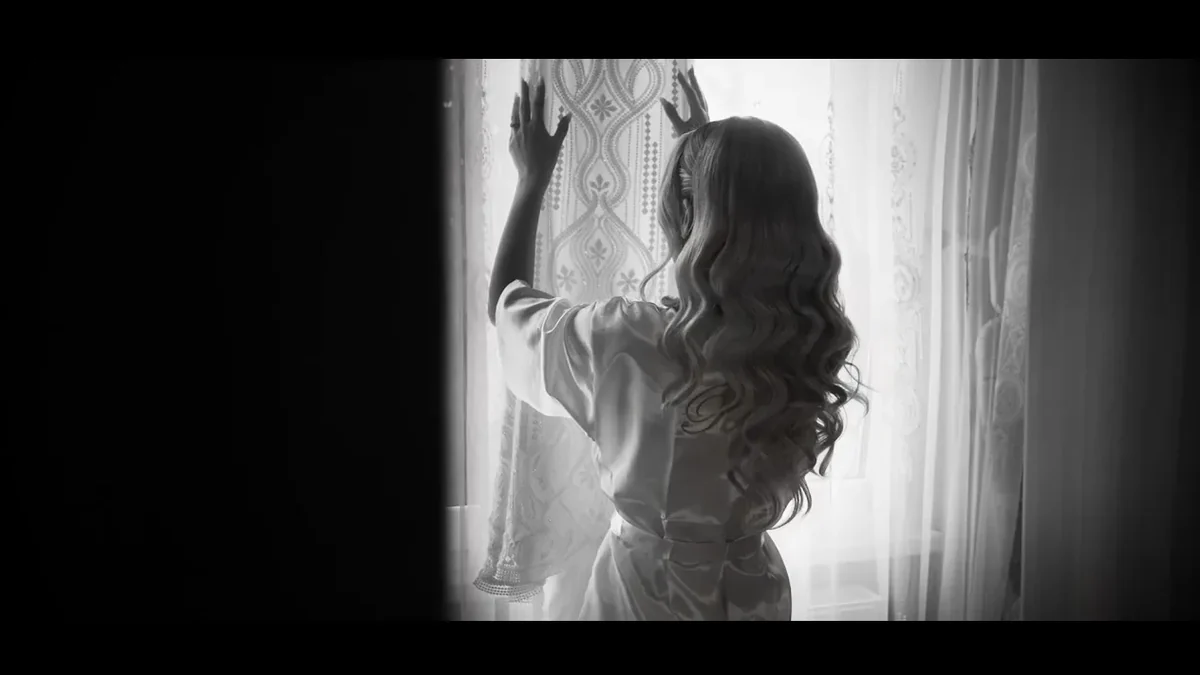
Wedding film / Brașov
A wedding film built as a memory: real moments, atmosphere, sound and editing that preserve the rhythm of the day without turning the event into a film set.
About this wedding film
The project puts the people and the moments that happen only once at the centre. The filming follows the atmosphere of the day and real gestures, while the edit connects them into a coherent form without replacing the event with artificial direction.
Image, sound and rhythm are treated together so the film works as a memory of the wedding, not simply as mechanical documentation.
The project reflects N-trance Media’s approach to wedding videography: discreet presence, attention to atmosphere and a selection of shots that lets moments breathe.
- Location
- Brașov.
- Lead camera operator
- Mugur Marin.
- Coverage
- At least three cameras in the overall coverage.
- Aerial footage
- Drone.
- Assistance
- Alina helps when the situation calls for it.
A dance that did almost all the work by itself.
This is the wedding project from Brașov, and it is completely different from the film with the boat. The first dance was spectacular and gave the film a very strong moment without my needing to invent anything extra.
I worked with at least three cameras for the overall coverage, with me as the lead camera operator, Alina helping when needed, plus a drone for the aerial footage.
At a wedding, there is no “do that again”.
The first dance at this wedding is a very good example of why I do not see event filming as a succession of beautiful shots.
On a directed video shoot, you can stop, move the light and say, “Let’s do another take.” At a wedding, the moment happens once. If you miss the look, the reaction or the movement that mattered, there is no rewind button for the people in front of you.
That is why I worked with multiple cameras. Not so I could say I had three cameras at the shoot, but because every angle gives me one more chance not to lose the moment and, later, more freedom in the edit.
With the couple in Brașov there was also the opposite situation: during the photo-video session I could create situations and movements. They responded extremely well and gave us a lot of material. But even there, I do not try to direct emotion. I can tell them where to walk, change the direction or create a situation. What happens between them afterwards has to remain theirs.
For me, the distinction is essential: I can build the frame. I do not want to build the reaction.
Perhaps that is exactly why the first dance remained so powerful in the film. There was nothing left for me to construct. I simply had to be ready when it happened.
I direct the situation, not the emotion.
During the photo-video session I created small games and visual situations with the couple. They responded extraordinarily well to direction, which gave us a lot of strong material. But to me, direction does not mean telling people what to feel. I can create a movement or a context. The reaction has to be real.
The method changes with the people and with the way wedding imagery itself evolves. One couple needs ideas and a small push. Another simply needs to be left alone. Here, their willingness to engage with the process made the difference.